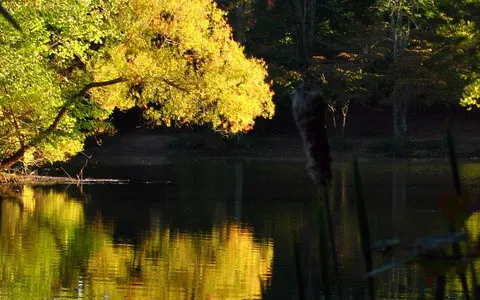
A timeless legacy from Doctor Evangeline Bowie
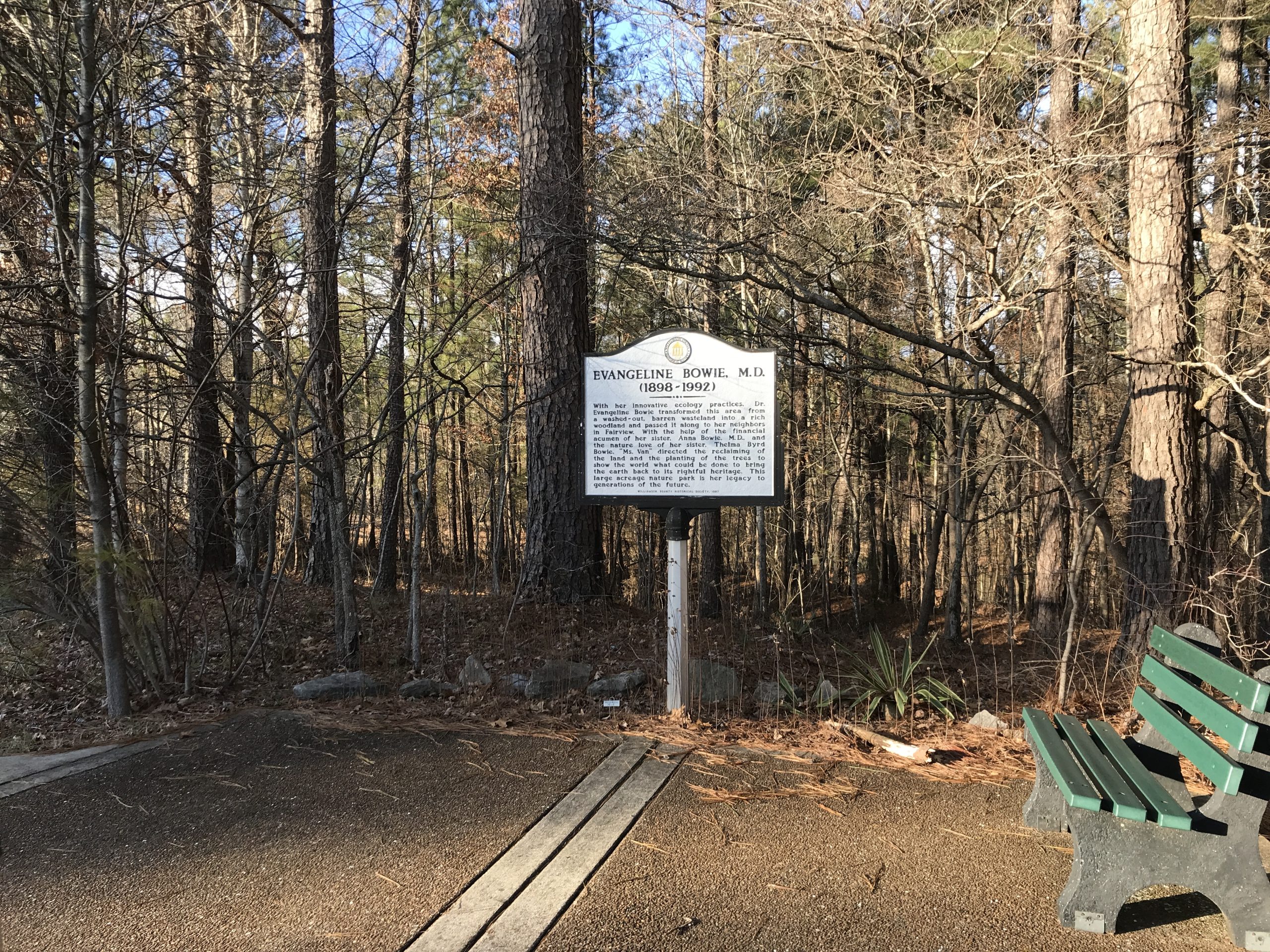
Prior to the death of Dr. Evangeline Bowie in 1992, the City of Fairview was graciously deeded the land that is now Bowie Nature Park. It was her wish that the city make a public nature park out of the 722-acre forest she had created from land that, at the time of her purchase in the 1950s, was so barren and eroded it was losing over 30 tons of topsoil annually.
Her land management techniques included hiring a bulldozer to build terraces, dig lakes and create a hydrology system. That system was so well designed that it has amazed even the most highly regarded land management experts. Her plan also included planting over 500,000 loblolly pine trees.
In 2003, the Bowie Park Nature Center was completed and opened, giving visitors a place to learn more about the park through nature exhibits, brochures and art. In 2008, Bowie Nature Park and the legacy of land provided by Dr. Bowie were placed in a conservation easement, protected by the Land Trust for Tennessee.
Ecology
Bowie Nature Park sits on the edge of the Central Basin and on the western escarpment of the Highland Rim of Middle Tennessee. Each of these physiographic provinces is uniquely different, which allows for an unusual mix of biota. There are specific species of plant life in the park that cannot be found as close as Nashville.
Within the park, 17 miles of winding trail move the traveler through several ecosystems: wetlands, grasslands, pine forest, oak and hickory forest, riparian corridor and lowland bottomland wetlands.